Mimi Jung:
An Unfinished Origin
JORDAN SHNITZER MUSEUM OF ART WSU
Mimi Jung:
An Unfinished Origin
JORDAN SHNITZER MUSEUM OF ART WSU
Text by Ryan Hardesty, Executive Director
Jordan Schnitzer Museum of Art WSU
WOVEN
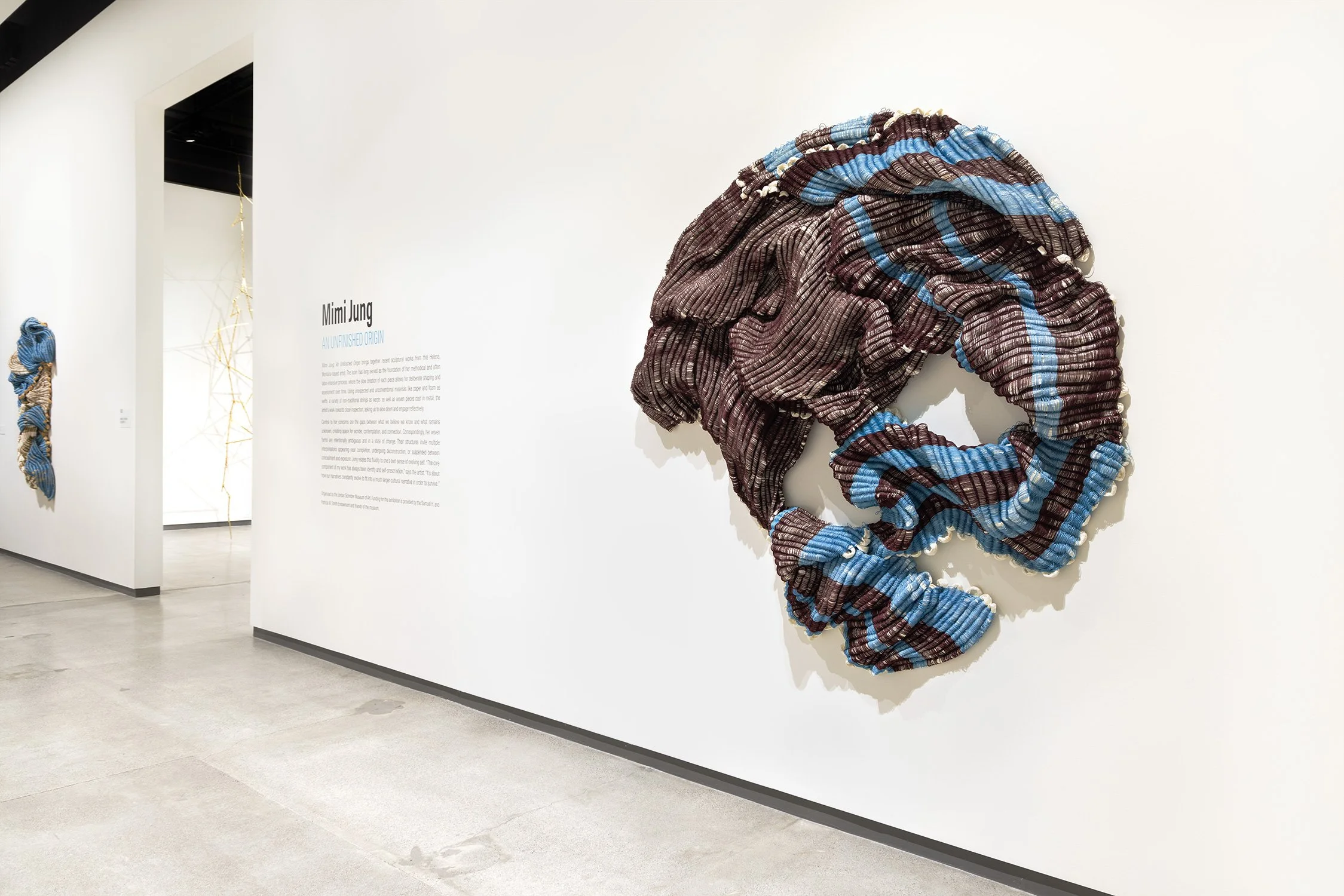
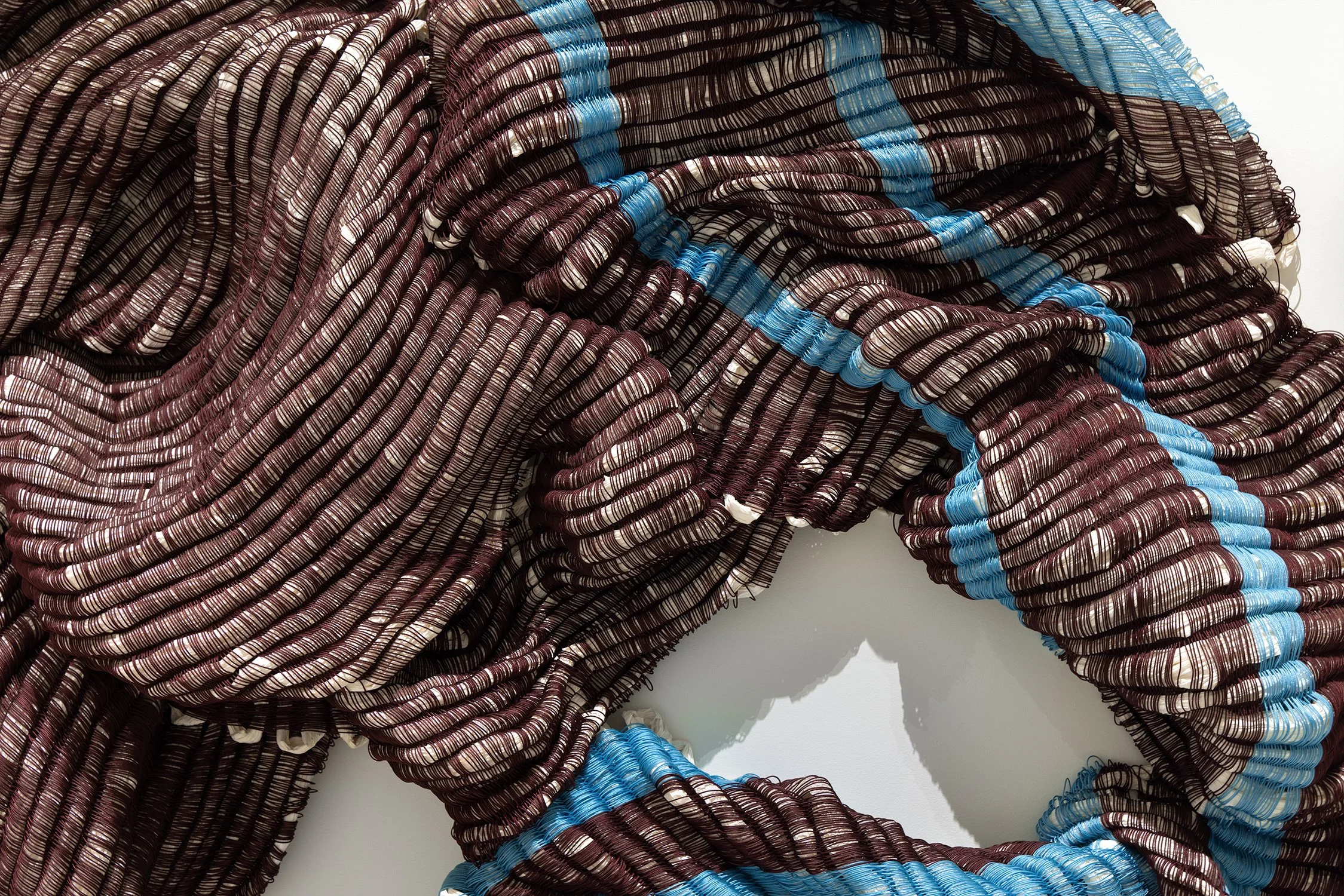
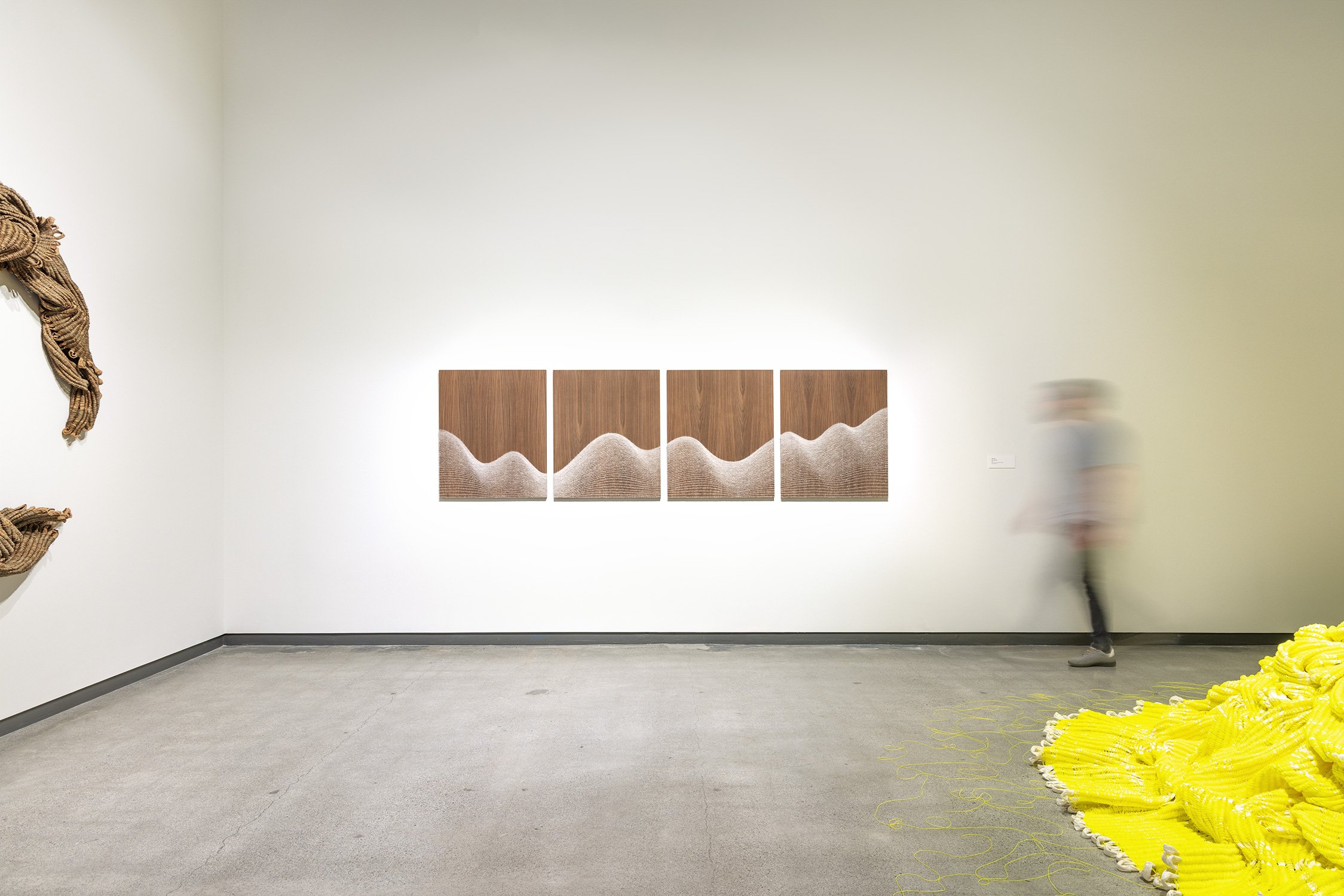
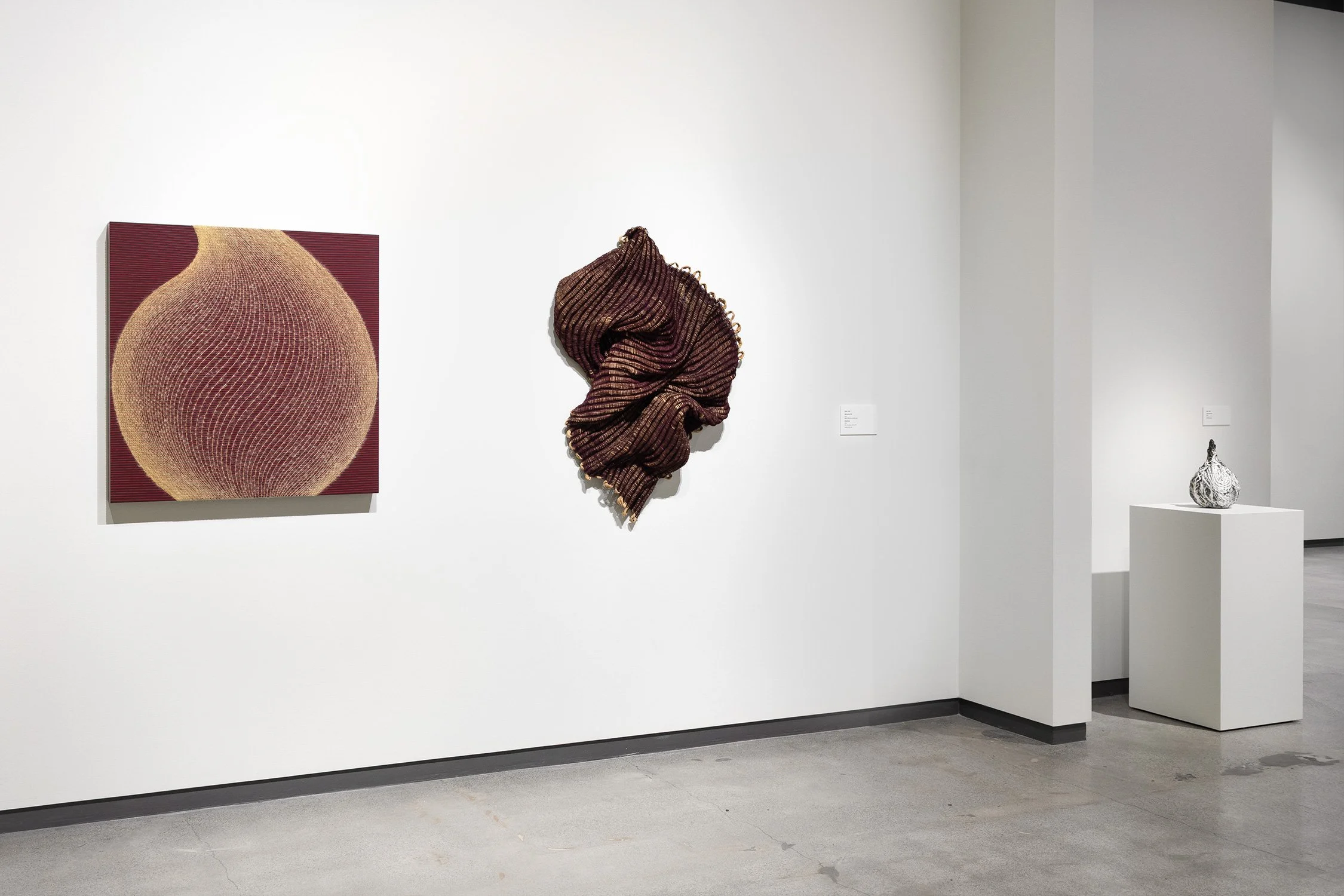
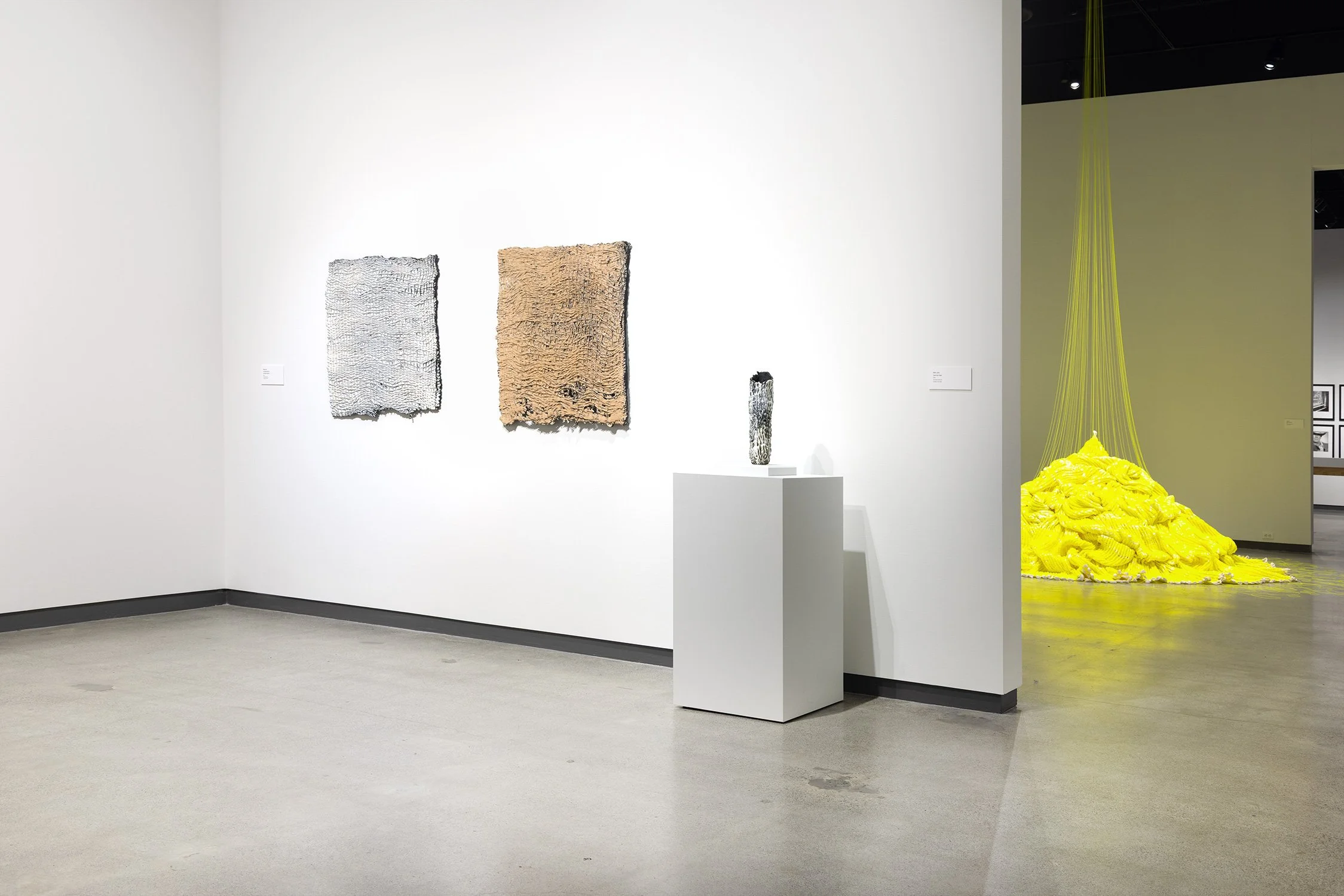
Mimi Jung began working with fiber on a loom in 2011, after completing her formal academic studies and losing access to university facilities. In search of space to continue working, she enrolled in several independent workshops; one of them unexpectedly introduced the artist to weaving and the loom. What began as a technical introduction became the foundation of her artistic practice. In her earliest works, Jung focused on flat tapestries, exploring the fundamental language of weaving—color, texture, and the structural relationship between warp and weft. However, Jung began to push beyond conventional textile forms in short order. In the mid-2010s, she experimented with thicker cords, rope, and layered materials, creating surfaces that projected outward and introduced depth and shadow. Her work gradually shifted from flat wall hangings toward sculptural and dimensional objects that emphasized tension, structure, and negative space.
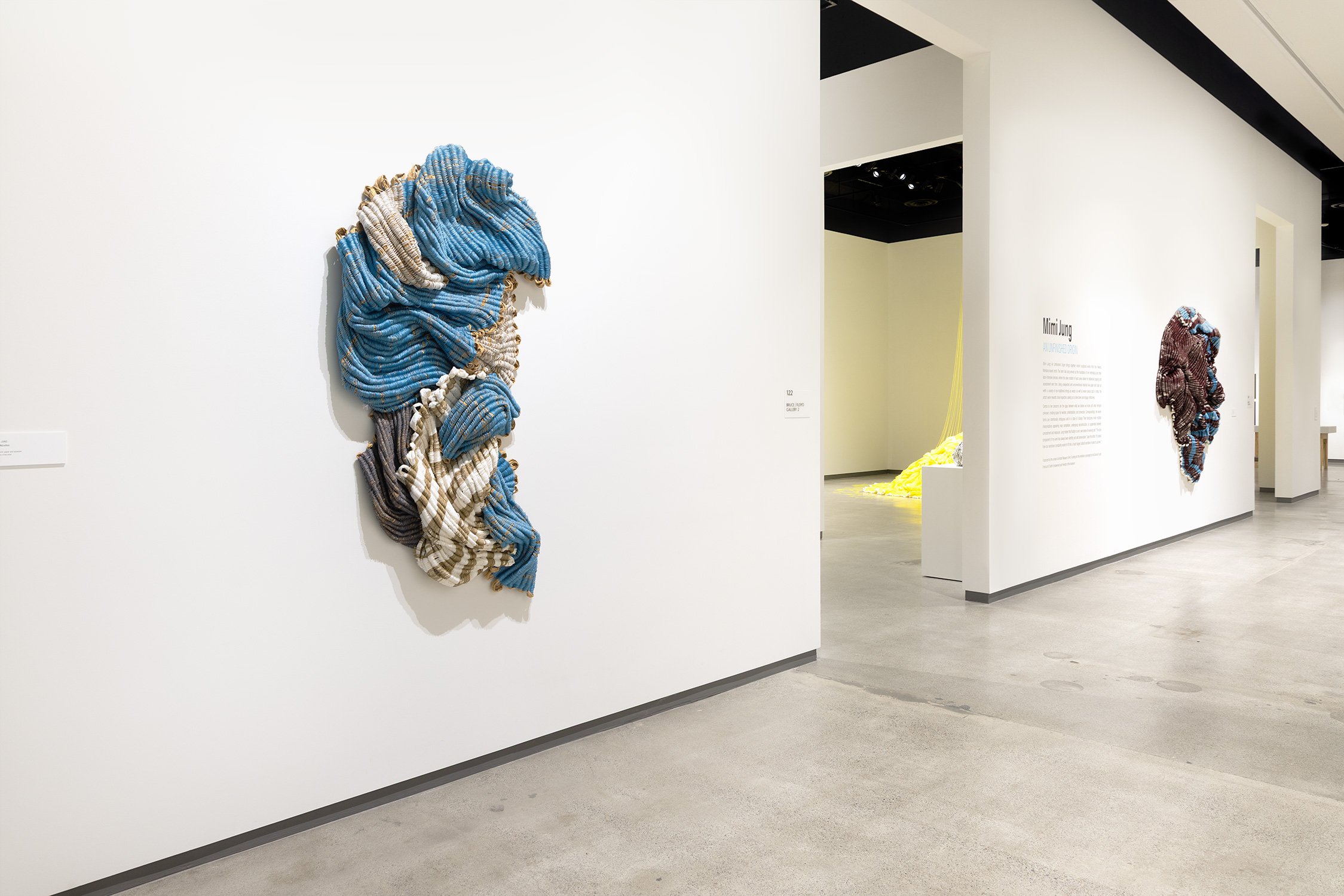
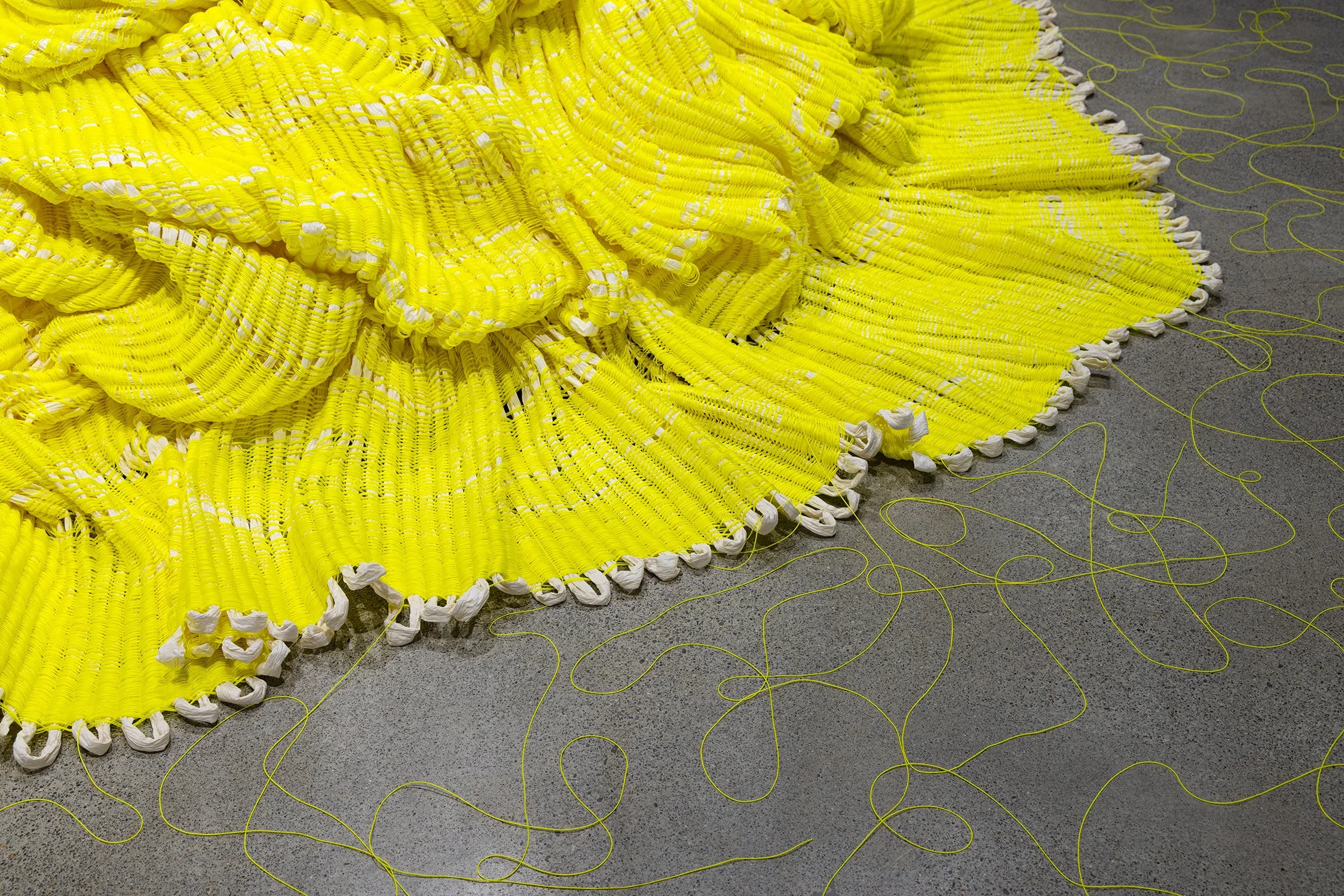
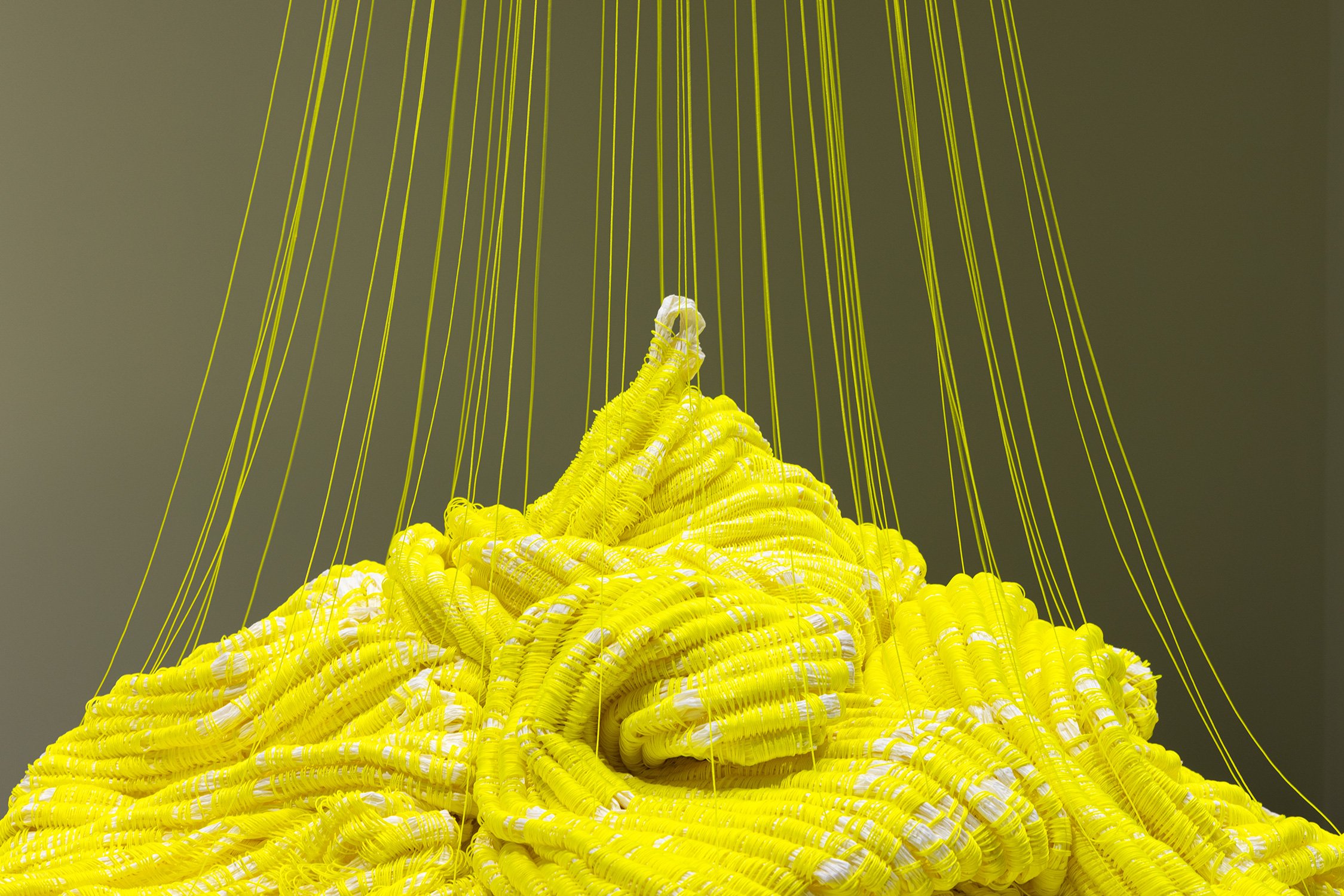
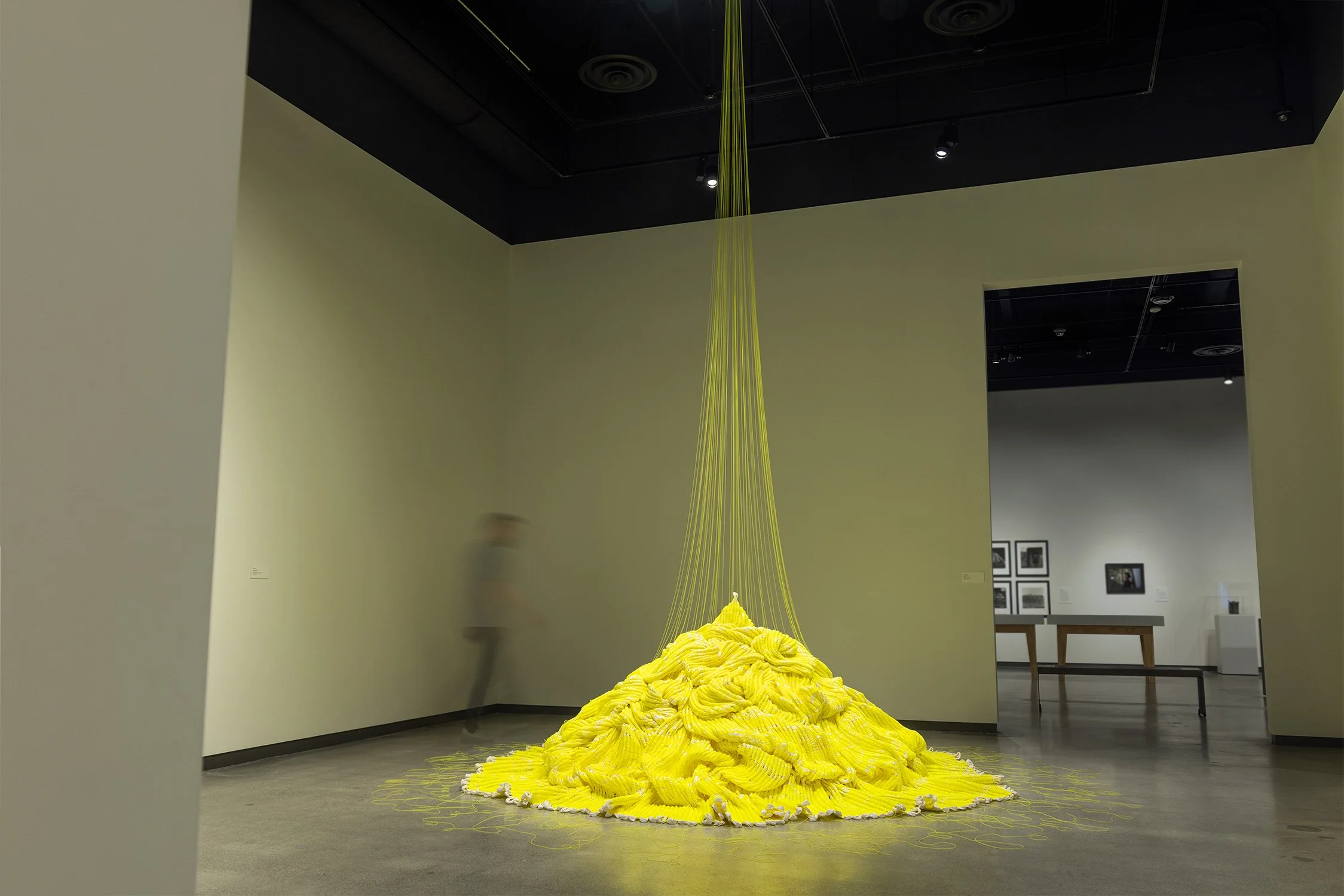
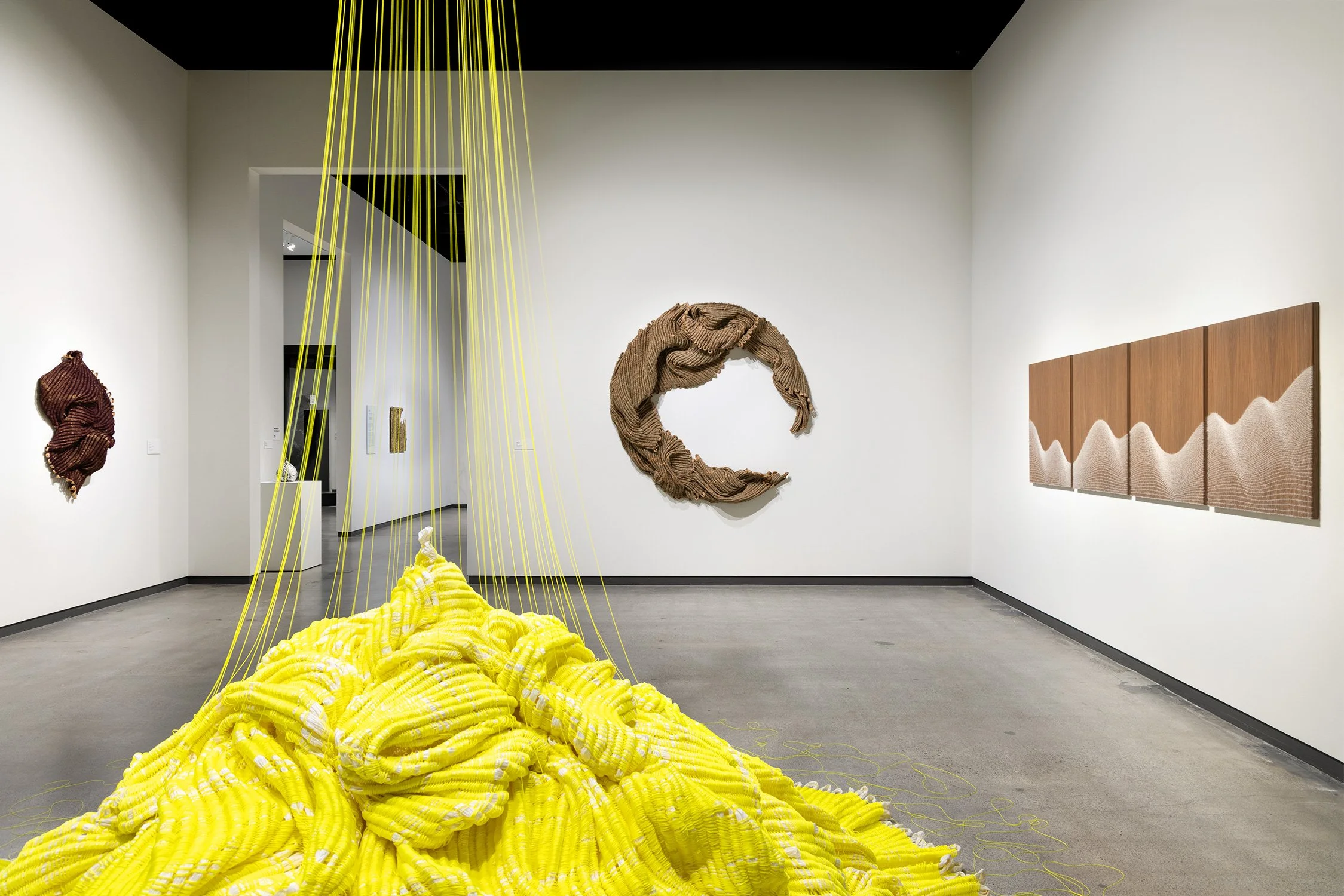
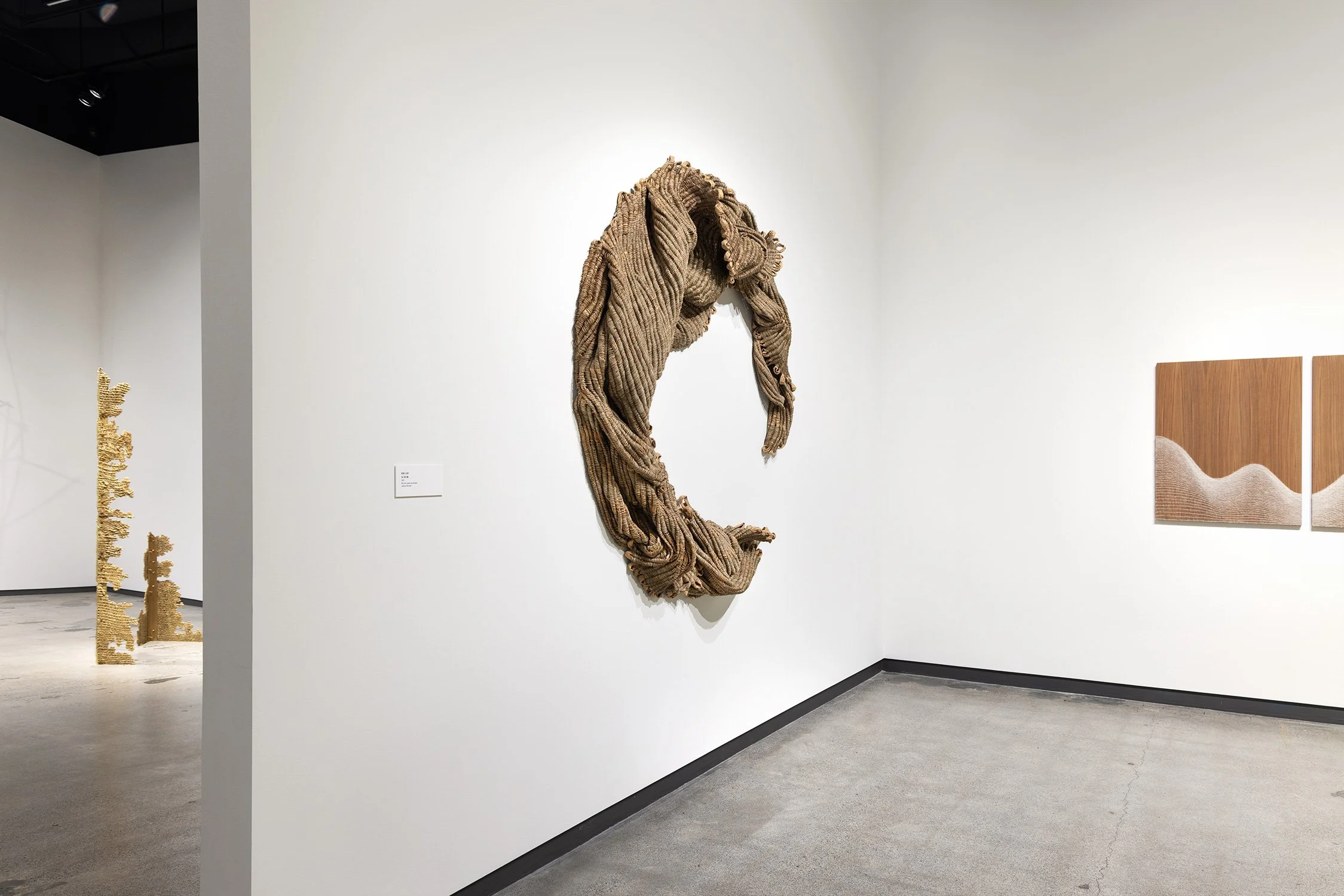
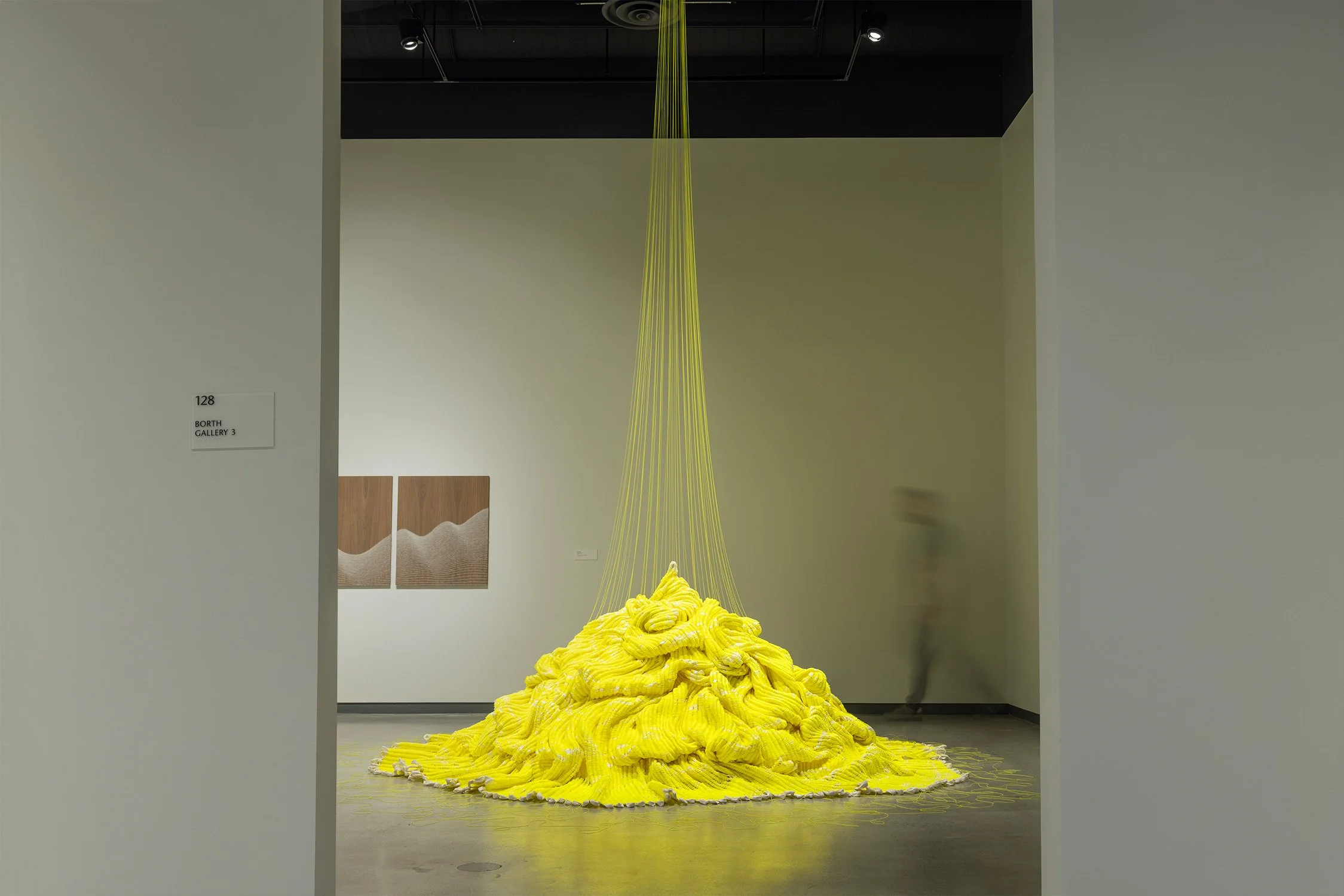
Works like So Tell Me, Their Unspoken, and The Niceties, all from 2023 and from her Fallen Fence series, examine forms that are in a state of flux, implying a sense of deterioration as well as change and becoming. Using dense bundles of cord and carefully manipulated warp structures, these large, architectural fiber works blur the boundary between textile and sculpture while still remaining fundamentally rooted in the loom. Our exhibition centerpiece, the 2026 vivid yellow Certain Uncertainty, has completely left the wall to fully inhabit the three-dimensional—ascending from the gallery floor to perhaps a metaphysical space above.
CAST
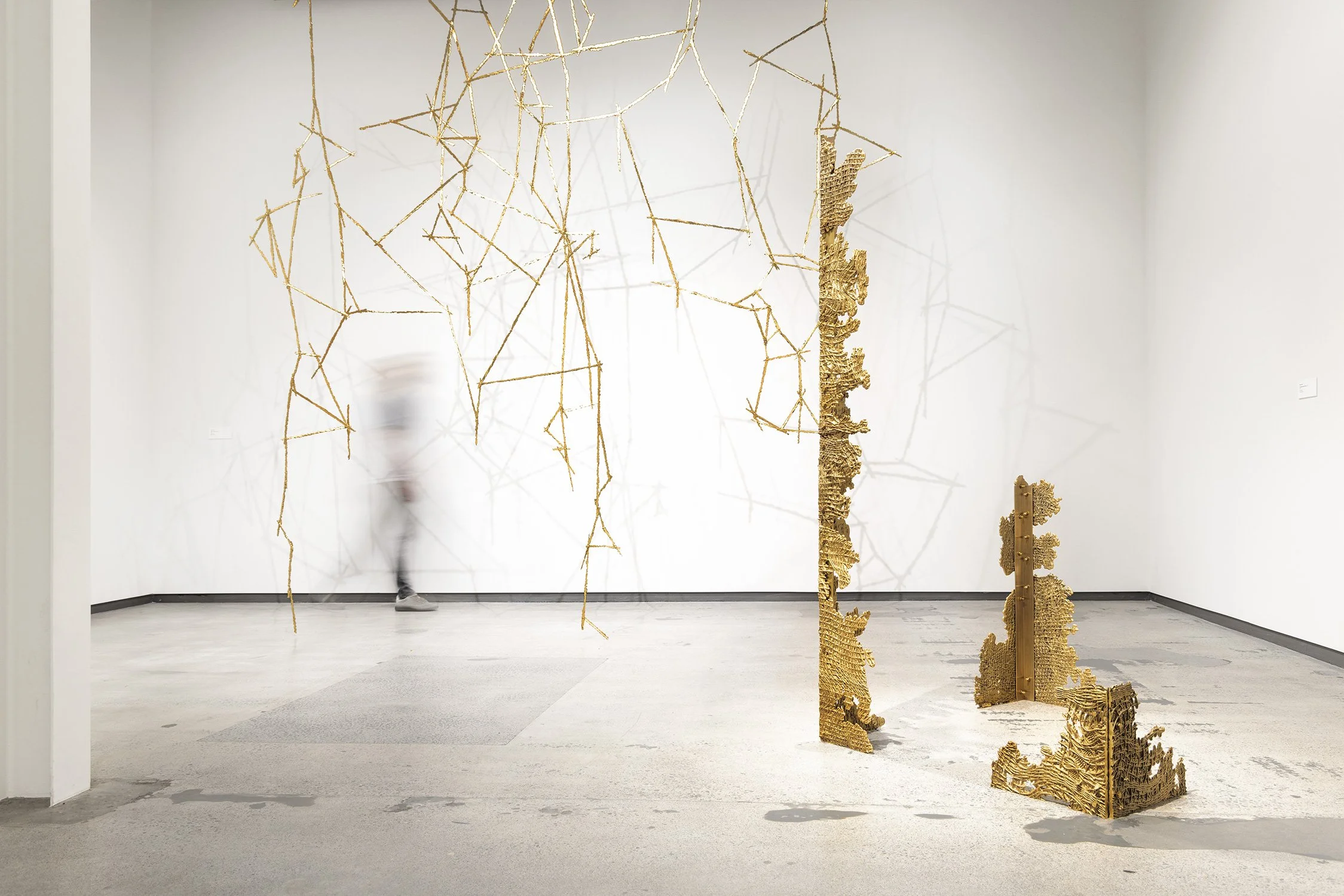
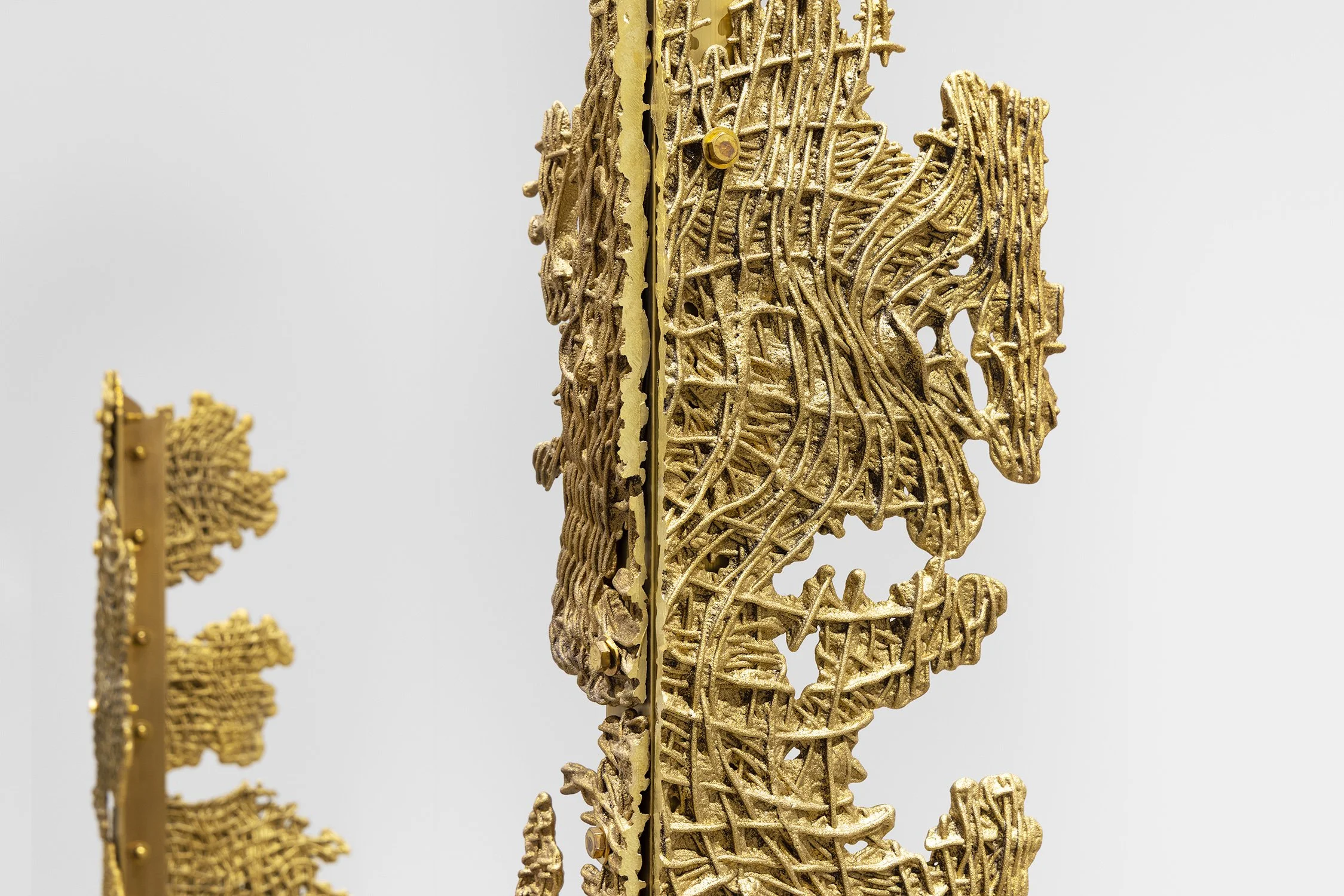
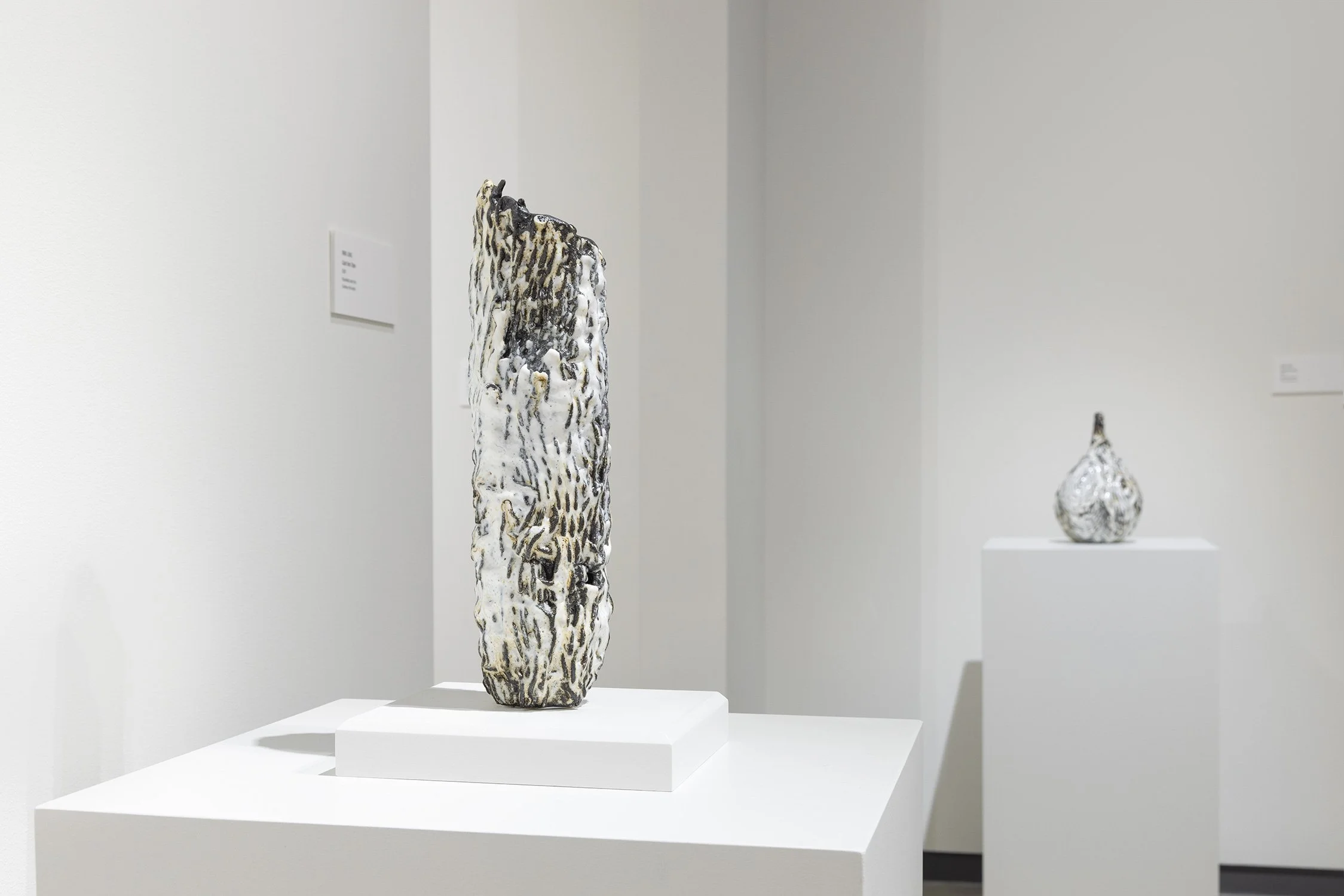
In 2020, Mimi Jung was invited to a residency program at the John Michael Kohler Arts Center providing her with the opportunity to create works of art utilizing the company’s industrial materials and equipment. Jung was exposed to a body of technical knowledge that enabled her to explore forms and concepts beyond the possibilities of her own fiber- based studio practice. In the years prior, Jung’s collaborations with various California foundries positioned her to experiment at Kohler with casting her handwoven weavings into new and surprising brass sculptures. Embracing spontaneity and physicality, these works contrasted with Jung’s more precise, and carefully planned works. The resulting sculptures invite reflection on material transformation from textile to metal—what is lost, what is gained, and how our perception of the works shifts while navigating these changes.
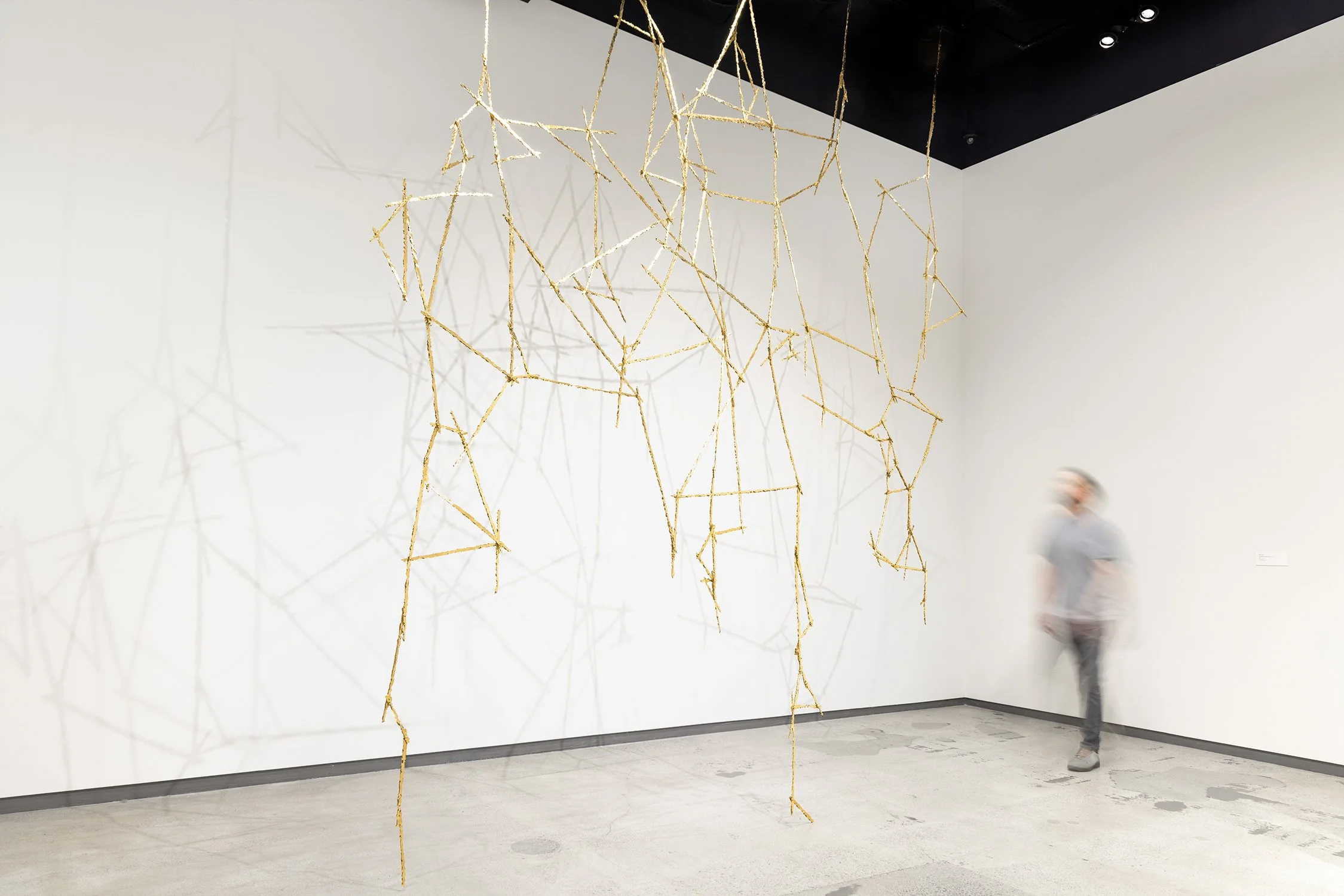
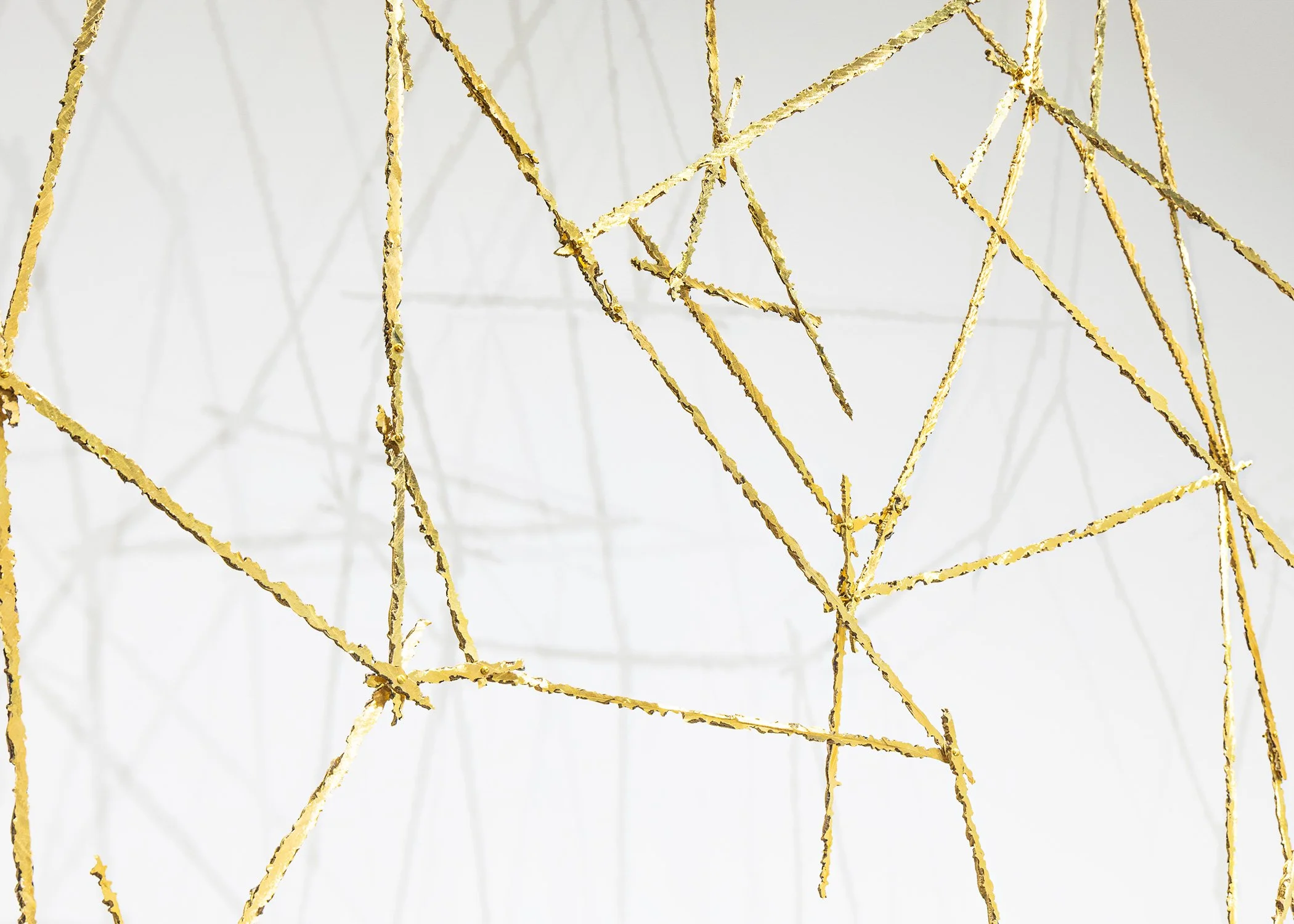
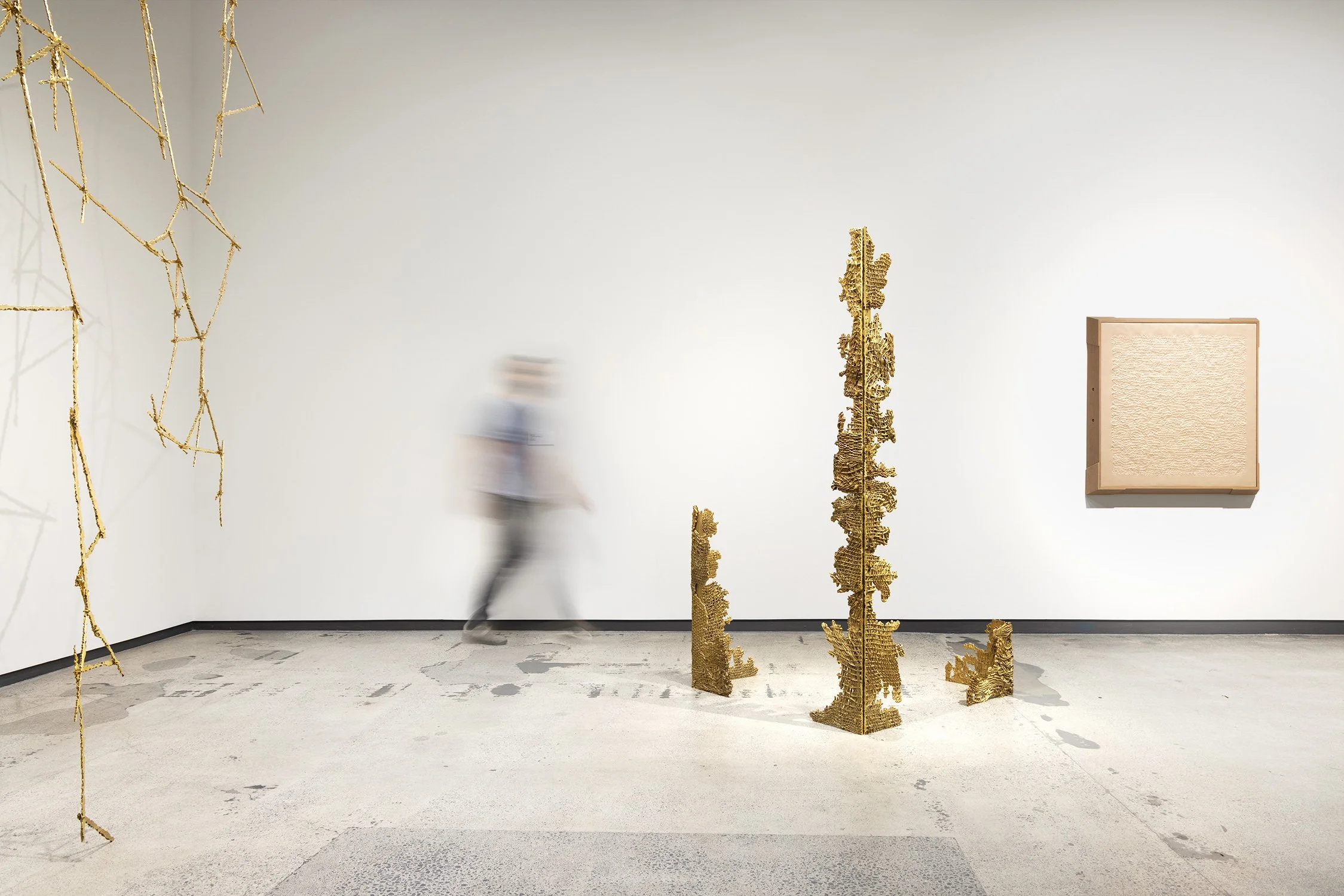
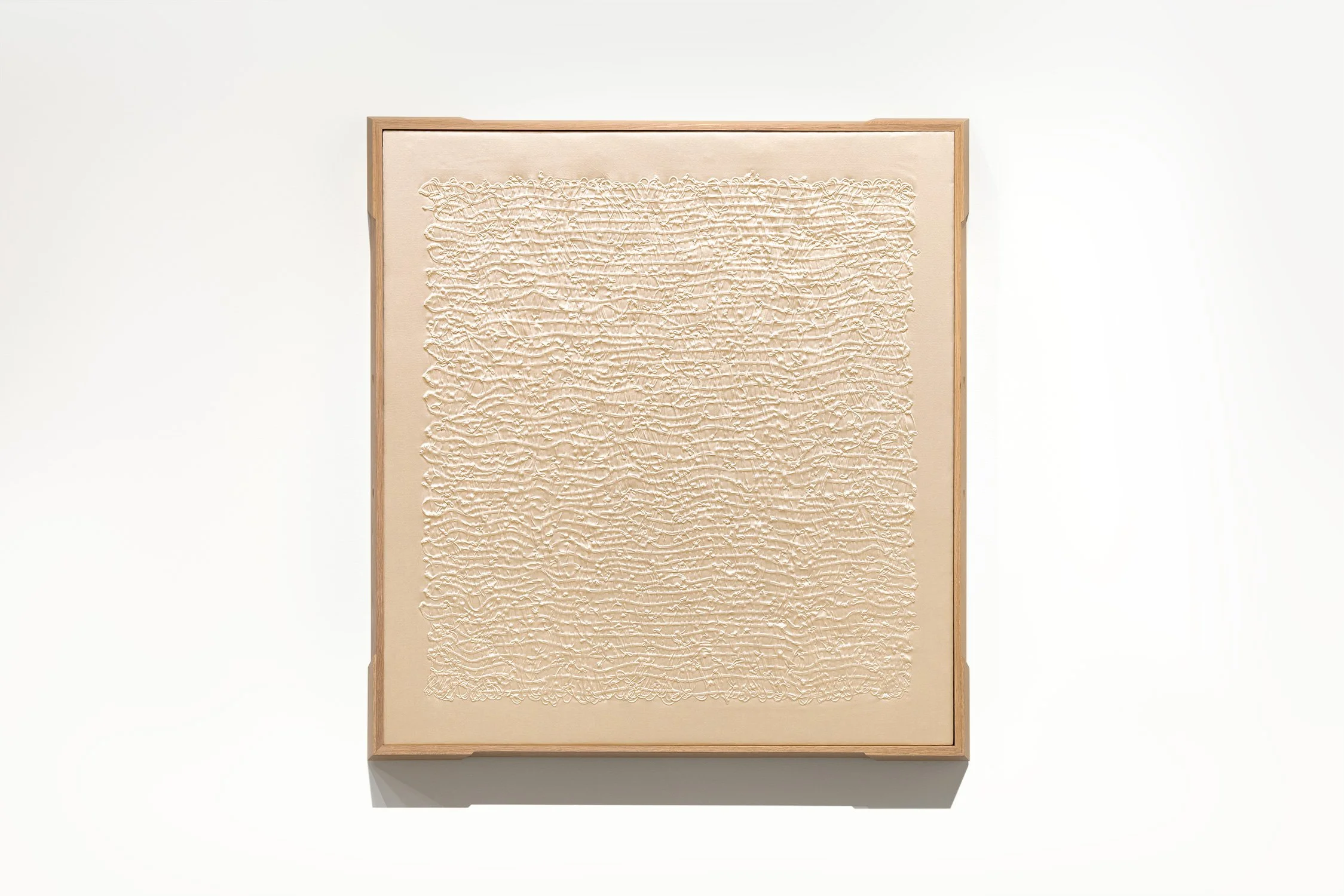
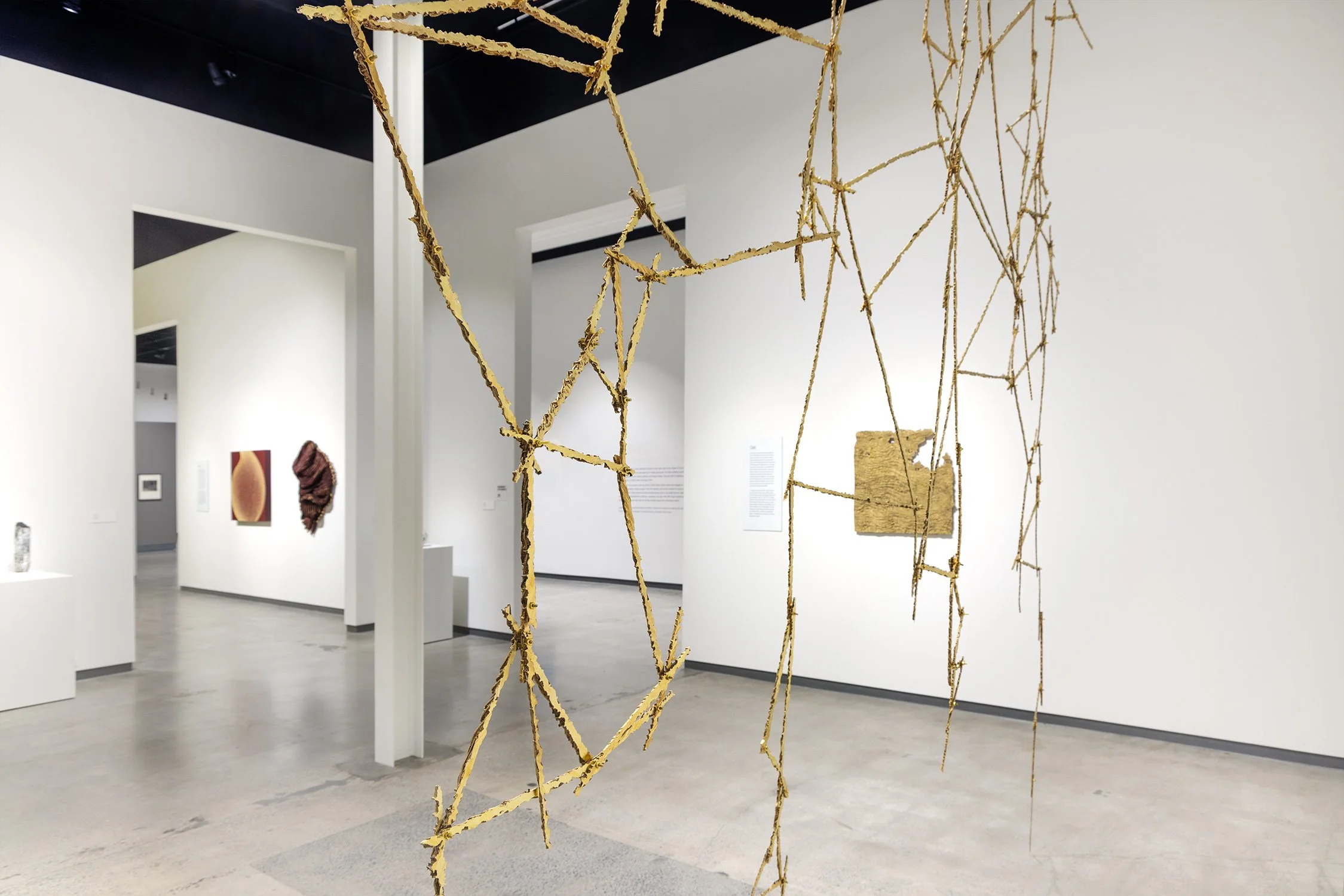
In the years since working with Kohler, Jung has expanded upon metal casting resulting in various additional bodies of work. While traditional casting typically destroys the sand mold after a single pour, Jung set out in Keep, Silk to conceptually preserve in fiber what was not meant to remain. Elsewhere, the artist has sawed the irregular brass remnants from previous castings into large-scale hanging curtains, transforming what was once a solid form into a shimmering filigree. Suspended and loosely articulated, these fragmented strands catch light and movement, taking on a transient, almost atmospheric quality, as the installations subtly sway and glint, emphasizing ephemerality over solidity.